


29 Jun Why Is Climate Change Important? A Student’s Guide
TL;DR:
- Climate change poses a major threat to ecosystems, human health, and the global economy. Immediate action through mitigation, adaptation, and education is essential to safeguard future generations and preserve Earth’s systems.
Climate change is the most significant environmental threat facing Earth’s systems and human wellbeing today. Global average surface temperature has risen approximately 1.43°C above 1850–1900 levels, and 2015–2025 stand as the hottest 11 years on record. That number is not just a statistic. It signals a fundamental shift in how Earth’s climate operates, with consequences that reach every ecosystem, economy, and community on the planet. Scientists now treat climate change as an active emergency, not a distant future risk. Understanding why climate change is important is the first step toward doing something about it.
Why is climate change important for ecosystems and biodiversity?
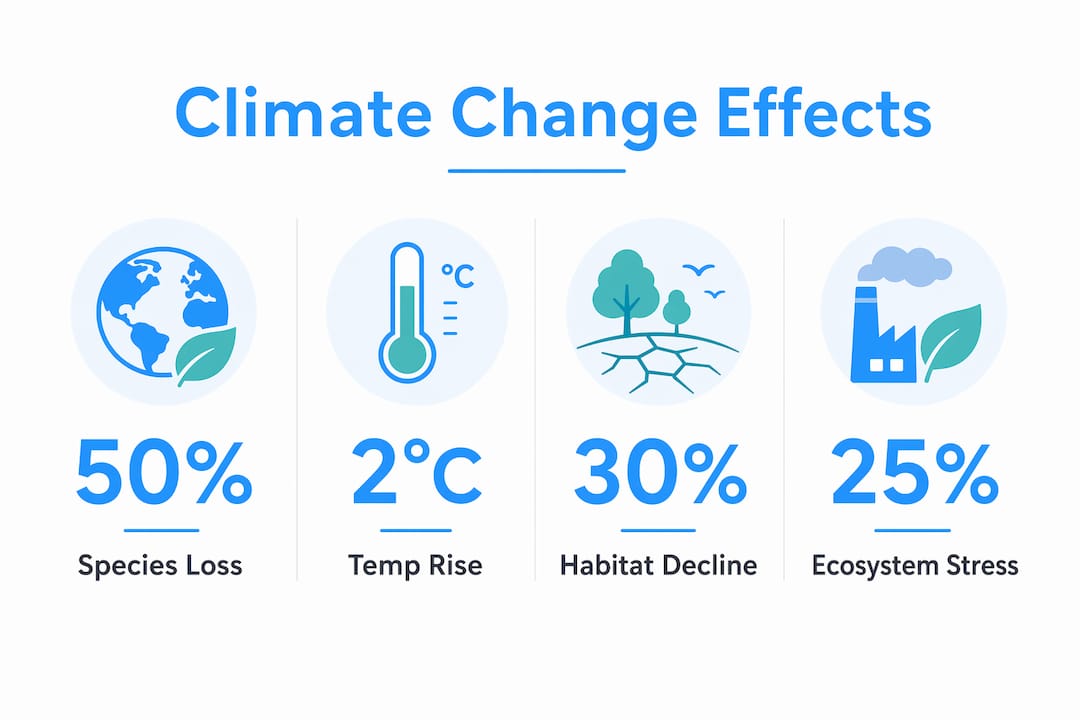
Climate change disrupts the natural balance that ecosystems depend on to function. Rising temperatures alter the timing of seasons, shift species ranges, and break apart food webs that took thousands of years to form. The effects show up everywhere, from Arctic ice sheets to tropical coral reefs to temperate forests.
Ecosystem disruptions caused by warming include:
- Melting ice sheets and glaciers: Polar ice loss raises sea levels and destroys habitat for species like polar bears, walruses, and countless marine organisms.
- Ocean warming and acidification: Warmer, more acidic oceans bleach coral reefs and reduce the fish populations that billions of people rely on for food.
- Shifting forest zones: Tree species cannot migrate fast enough to keep pace with warming, leading to forest die-offs and increased wildfire risk.
- Phenological mismatches: When flowers bloom earlier but pollinators do not adjust at the same rate, entire plant-pollinator relationships collapse.
- Species extinction pressure: Habitat loss combined with temperature stress pushes vulnerable species toward extinction faster than natural adaptation can occur.
These changes do not happen in isolation. When one species disappears or one habitat degrades, the effects ripple outward through the entire food web. The concept of species diversity, central to IB Environmental Systems and Societies (ESS), explains exactly why this matters: diverse ecosystems are more resilient, and losing that diversity makes the whole system fragile.
Pro Tip: When studying ecosystem impacts for IB ESS, connect each effect to a specific feedback loop. For example, melting permafrost releases methane, which accelerates warming, which melts more permafrost. Showing that chain of reasoning in your exam answers earns top marks.

How does climate change affect human health?
Heat stress is the leading cause of weather-related mortality worldwide, worsening cardiovascular and respiratory illnesses across all age groups. Climate change does not just make summers uncomfortable. It creates conditions where human bodies face physiological limits that medical systems struggle to manage.
The health consequences of a warming planet follow a clear pattern:
- Intensified heat stress: Extreme heat stress days have increased by up to 50 days annually in some regions. Nighttime temperatures are warming faster than daytime temperatures, at 0.32°C per decade, which prevents the body from recovering overnight.
- Spread of vector-borne diseases: Warmer temperatures expand the geographic range of mosquitoes, ticks, and other disease vectors. Malaria, dengue fever, and Lyme disease are reaching populations that previously had no exposure.
- Water-borne illness: Flooding and drought both contaminate water supplies, increasing the risk of cholera, typhoid, and other water-borne diseases.
- Mental health impacts: Communities that lose homes, livelihoods, or cultural sites to climate disasters face grief, anxiety, and post-traumatic stress at a population scale.
“Recognition of non-economic losses and damages highlights how vulnerable communities suffer disproportionate climate impacts. Safeguarding cultures and natural systems is key to community resilience.” — United Nations
The social dimension of climate change significance is often underestimated. Low-income communities, Indigenous populations, and people in climate-exposed regions bear the heaviest burden while contributing the least to the problem. Understanding how climate change affects us at the community level is central to any serious study of environmental systems.
What are the economic risks of climate change?
Climate change acts as a risk multiplier across every major sector of the global economy. Agriculture, housing, transport, insurance, and energy all face growing costs as extreme weather becomes more frequent and severe.
The numbers from Europe alone are striking. Extreme weather events caused approximately 40,000 deaths and EUR 738 billion in economic losses across Europe from 1980 to 2023. That figure covers only one region over four decades. The global picture is far larger.
| Sector | Climate risk | Consequence |
|---|---|---|
| Agriculture | Drought, flooding, heat stress | Crop failure, food insecurity, price spikes |
| Housing and infrastructure | Sea level rise, extreme storms | Property damage, displacement, repair costs |
| Transport | Flooding, heat damage to roads and rails | Supply chain disruption, increased costs |
| Public health systems | Disease spread, heat emergencies | Higher healthcare spending, workforce loss |
| Insurance | Increased claims from extreme events | Rising premiums, coverage withdrawal |
Food insecurity deserves special attention. When harvests fail repeatedly, prices rise globally, and the populations least able to absorb those costs suffer most. This creates cascading effects: food insecurity drives migration, migration strains urban infrastructure, and strained infrastructure reduces economic productivity. The World Economic Forum identifies climate change as a top global risk precisely because it amplifies every other vulnerability a society already has.
Pro Tip: For IB ESS internal assessments, economic data like the European Environment Agency figures are excellent sources for quantitative analysis. Pairing economic losses with ecosystem service valuations shows examiners you understand the full scope of environmental impact.
Why does addressing climate change matter for future generations?
Addressing climate change now is an ethical responsibility, not just a policy choice. The window to prevent worst outcomes is rapidly closing. Collective emission reduction is the only pathway to a livable future for the generations that follow.
Climate change threatens to reverse life expectancy gains by worsening food insecurity and non-communicable diseases. That means the health progress humanity made over the past century could be undone by environmental deterioration. Securing the environmental foundations of human health is not optional. It is the basis for everything else.
Three interconnected strategies define the path forward:
- Mitigation: Reducing greenhouse gas emissions through renewable energy, electrified transport, and sustainable land use. Mitigation addresses the root cause of warming.
- Adaptation: Building resilience into communities, infrastructure, and food systems so they can withstand the changes already locked in. Investing in drought resilience and land restoration protects lives and livelihoods while sequestering carbon.
- Education and awareness: Students and educators play a direct role in shaping how societies respond. Climate change awareness built in schools today translates into policy, behavior, and innovation tomorrow.
Climate adaptation investments can provide a triple dividend: preventing losses, saving lives, and creating green jobs. That framing matters for students studying sustainability, because it shows that environmental action and economic development are not opposites. They reinforce each other when planned well. The role of education in sustainability is not peripheral. It is central to building the informed public that effective climate action requires.
Key Takeaways
Climate change is important because it simultaneously threatens ecosystems, human health, economic stability, and the long-term habitability of Earth, making immediate collective action the only viable response.
| Point | Details |
|---|---|
| Temperature rise is measurable and accelerating | Global surface temperature is up 1.43°C above pre-industrial levels, with 2015–2025 the hottest decade on record. |
| Ecosystems face irreversible disruption | Species loss, habitat destruction, and food web collapse are already underway and compound over time. |
| Health risks are direct and expanding | Heat stress, disease spread, and mental health impacts hit vulnerable communities hardest and disproportionately. |
| Economic losses are already severe | Europe alone recorded EUR 738 billion in climate-related losses from 1980 to 2023. |
| Action now protects future generations | Mitigation, adaptation, and education together create the triple dividend of lives saved, losses prevented, and jobs created. |
Why I think climate change education is the most underrated tool we have
Most climate conversations focus on policy and technology. Those matter. But after more than 13 years working with IB ESS students, I am convinced that education is where the real leverage sits.
Students who genuinely understand climate systems do not just memorize facts. They start connecting dots. They see how a drought in one region drives food prices in another. They recognize that a coral reef is not just beautiful. It is a protein source for hundreds of millions of people. That kind of systems thinking is exactly what the world needs more of.
What I find encouraging is that students are not passive on this topic. They arrive curious, sometimes anxious, and almost always motivated to understand. The challenge is giving them the conceptual tools to channel that energy into clear analysis rather than vague worry. When a student can explain the feedback loop between permafrost thaw and methane release, or articulate why non-economic losses matter as much as GDP figures, they are not just prepared for an exam. They are prepared to participate in the decisions that will shape the next 50 years.
The urgency is real. The science is clear. And the students sitting in ESS classrooms right now are exactly the people who will be making the decisions that matter most. That is not a burden. It is an opportunity worth taking seriously.
— Marija
How Esstutor helps you master climate change for IB ESS
Climate change sits at the heart of IB Environmental Systems and Societies, and understanding it deeply makes a real difference in your scores.

At Esstutor, personalized tutoring sessions help you move beyond surface-level definitions and build the analytical skills examiners reward. Whether you are working on your IB ESS internal assessment or preparing for Paper 2 case studies, having an experienced IB examiner guide your thinking on topics like ecosystem disruption, climate adaptation, and sustainability makes the preparation process clearer and more focused. Esstutor offers flexible online sessions tailored to where you are right now, with a trial lesson available so you can see the approach before committing. If climate change is on your syllabus and you want to understand it well enough to write about it with confidence, this is a practical next step.
FAQ
Why is climate change important to study?
Climate change affects every system students study in IB ESS, from ecosystems and biodiversity to human health and economics. Understanding it builds the systems thinking that examiners expect and that real-world environmental work demands.
What is the most serious effect of climate change?
Heat stress is the leading cause of weather-related mortality worldwide, and its effects compound through cardiovascular illness, disease spread, and food insecurity. No single impact exists in isolation; each one amplifies the others.
How does climate change affect future generations?
Climate change threatens to reverse life expectancy gains made over the past century by worsening food insecurity and non-communicable diseases. Collective emission reductions now are the only way to preserve a livable environment for people born today.
What does climate change significance mean in IB ESS?
In IB ESS, climate change significance refers to the scale, speed, and irreversibility of its effects on natural and human systems. Students are expected to evaluate these effects using evidence, including quantitative data and case studies.
How can students take climate change seriously without feeling helpless?
Focus on what you can analyze and explain clearly. Understanding the science, the feedback loops, and the policy responses gives you agency. Students who grasp the full picture are better positioned to contribute to solutions, starting with their own assessments and coursework.
No Comments