

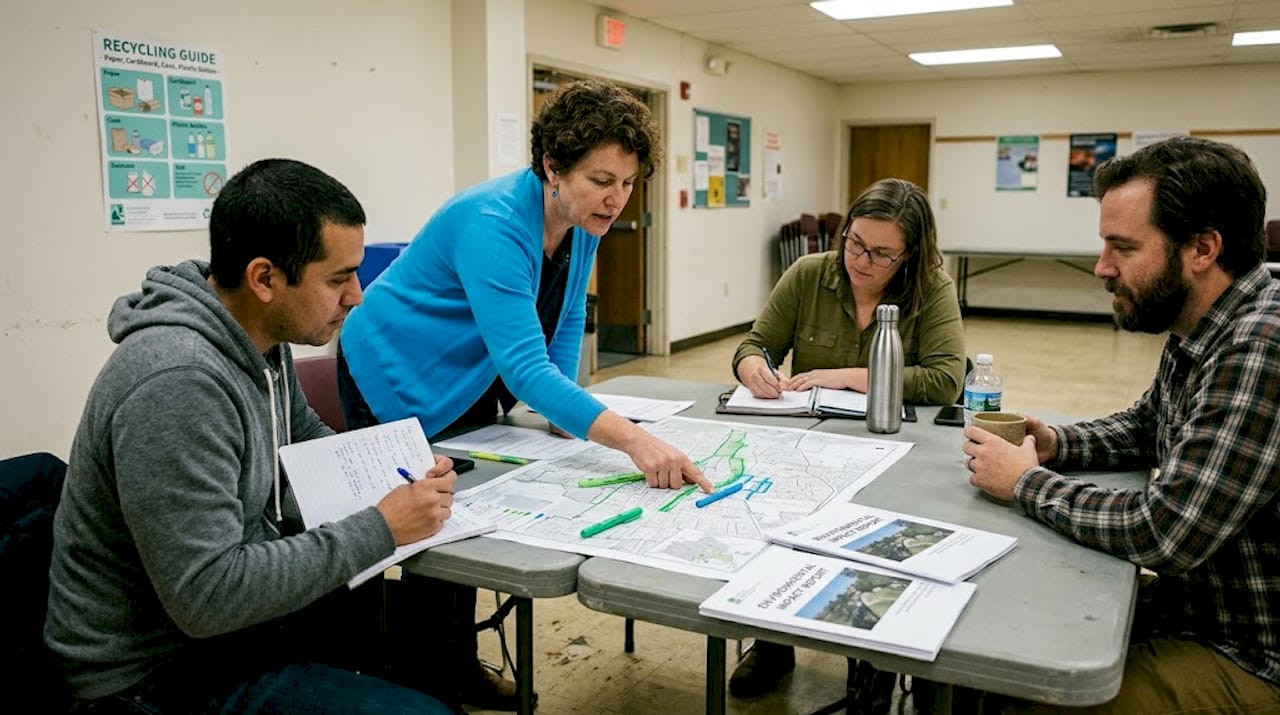
03 May Environmental justice: principles, impact, and global relevance
TL;DR:
- Environmental justice ensures fair treatment and meaningful involvement for all communities in environmental decisions.
- It highlights how structural inequalities cause disproportionate exposure to hazards and unequal access to resources.
Environmental problems do not affect everyone equally. Where you live, your income level, and your background all shape how much pollution you breathe, how often floods threaten your home, and whether your voice is heard in policy decisions. For IB ESS students, understanding environmental justice (EJ) is not just a bonus topic. It is a powerful analytical lens that can elevate your internal assessments, essays, and exam responses from basic description to genuine critical thinking. This article walks you through the core definitions, real-world examples, practical tools, and application strategies you need to handle EJ confidently in your coursework.
Table of Contents
- What is environmental justice?
- How does environmental injustice happen?
- Tools and approaches for assessing environmental justice
- Broader dimensions and debate: Beyond unequal siting
- Applying environmental justice in IB: Coursework and beyond
- Why a nuanced approach to environmental justice matters in IB ESS
- Take your IB ESS mastery further
- Frequently asked questions
Key Takeaways
| Point | Details |
|---|---|
| Fairness and participation | Environmental justice means fair treatment and genuine involvement for all groups in environmental decisions. |
| Disparities are real | Environmental risks and benefits are not distributed equally, with some communities facing much higher burdens. |
| Policy tools exist | Mapping and cumulative impact tools help measure and address environmental injustice globally. |
| Legal context matters | Civil rights and legal frameworks shape how environmental justice is defined and enforced. |
| Apply EJ in assessments | IB students should use environmental justice analysis in case studies and internal assessments for deeper understanding. |
What is environmental justice?
Environmental justice grew out of grassroots activism in the United States during the 1980s, when communities noticed that toxic facilities were consistently placed near low-income neighborhoods and communities of color. That local pattern sparked a global conversation about who bears the costs of environmental decisions.
The concept is now clearly defined: fair treatment and meaningful involvement of all people in environmental laws, regulations, and policies ensures that no group carries a disproportionate share of negative environmental consequences. Notice two key elements here: fair treatment (outcomes) and meaningful involvement (process). Both matter equally.
“Environmental justice is the fair treatment and meaningful involvement of all people regardless of race, color, national origin, or income with respect to the development, implementation, and enforcement of environmental laws, regulations, and policies.”
How is EJ different from sustainability? Sustainability focuses on long-term resource management and ecosystem health. EJ asks who benefits and who suffers from current and future environmental conditions. They are related but not the same. You need both lenses for strong IB analysis.
Here are the core EJ principles you should know for your coursework:
- Equitable distribution: Environmental benefits (clean air, green space, safe water) and burdens (pollution, waste, flood risk) should be shared fairly across populations.
- Procedural justice: All communities, especially marginalized ones, should have a genuine voice in decisions that affect their environment.
- Recognition: Different cultural, historical, and social identities shape how groups experience environmental harm.
- Restorative justice: Communities that have historically faced harm deserve targeted action to reduce those burdens over time.
Understanding these principles connects directly to the environmental literacy concepts that underpin the entire IB ESS course.
How does environmental injustice happen?
Now that we know what EJ is, let’s see why these principles matter by looking at real-world disparities and case studies.
Environmental injustice occurs when certain communities face greater exposure to hazards and reduced access to environmental goods and protections. This does not happen by accident. It reflects patterns of political power, land value, and historical exclusion.
Consider air quality. In many cities, highways, industrial zones, and waste facilities are clustered in lower-income neighborhoods. Residents breathe higher concentrations of particulate matter, nitrogen dioxide, and other pollutants every day. Research shows that disparities in air pollution can persist or even widen over time despite overall improvements in average pollution metrics. In other words, the average improves, but the gap between the most and least exposed groups does not close.
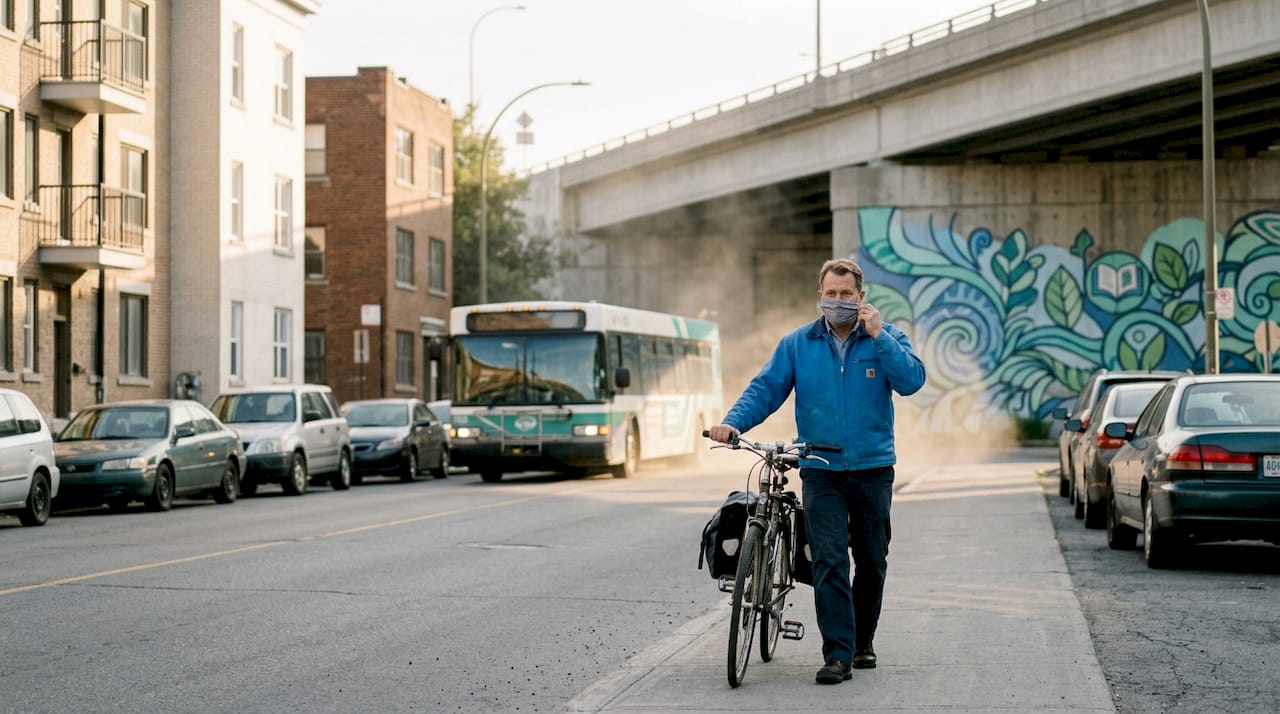
Here is a summary of commonly documented EJ disparities:
| Environmental issue | Groups most affected | Key outcome |
|---|---|---|
| Air pollution (PM2.5, NOx) | Low-income communities, minorities | Higher rates of asthma, cardiovascular disease |
| Toxic waste siting | Indigenous, low-income communities | Long-term soil and water contamination |
| Flood and climate risk | Coastal low-income communities | Greater property loss, displacement |
| Green space access | Urban low-income areas | Reduced mental health, higher heat exposure |
| Safe drinking water | Rural and minority communities | Lead exposure, gastrointestinal illness |
A critical concept here is cumulative impact. A single factory near your home may seem manageable. But when you layer a highway, a waste transfer station, a power plant, and limited tree cover on top of each other, the combined effect on health is far greater than any single source suggests. This is why a single-issue analysis can seriously mislead your IB evaluation.
The groups most commonly identified in EJ research include:
- Racial and ethnic minorities
- Low-income households
- Indigenous and First Nations peoples
- Migrant and undocumented workers
- Children and elderly residents in underserved areas
Thinking critically about environmental stewardship impact means asking not just what environmental action is being taken, but whether it reaches the communities that need it most. You can also strengthen your analysis by connecting EJ to the broader range of environmental issues in ESS, from deforestation to marine pollution.
Tools and approaches for assessing environmental justice
Identifying and addressing injustice requires clear methods. Let’s break down the practical tools professionals use.
EJ assessments often rely on cumulative-impact approaches that consider multiple pollutants and sources alongside information about who lives in affected areas. Simply measuring one chemical at one site is not enough. You need to combine environmental data with demographic and social vulnerability data to get the full picture.
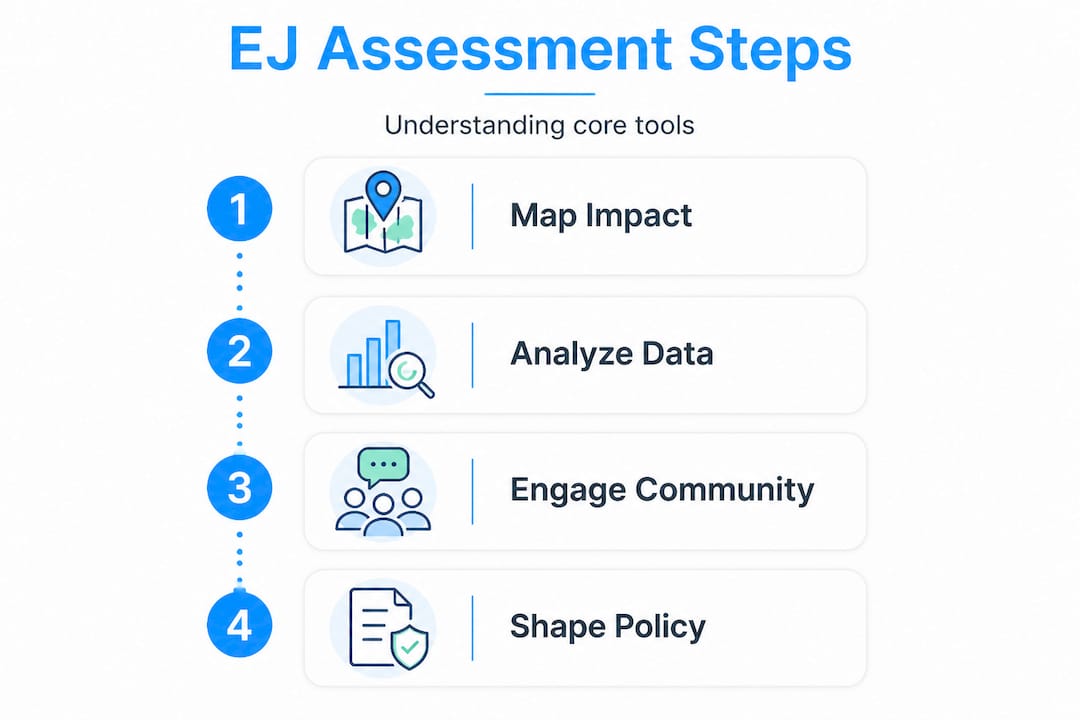
Here is how major assessment tools compare:
| Tool | What it measures | Strengths | Limitations |
|---|---|---|---|
| EJScreen (U.S. EPA) | Pollution indicators + demographics | Free, publicly accessible, visual maps | U.S. only, not real-time |
| Cumulative impact assessment | Multiple stressors combined | Captures true burden, good for policy | Data intensive, slow to update |
| Community surveys | Lived experience, perceived risk | Captures what data misses | Can be hard to standardize |
| Health impact assessment (HIA) | Projected health outcomes of policies | Proactive, forward-looking | Requires expert input and time |
EJScreen and similar tools allow policymakers to identify potentially overburdened areas before decisions are made. For example, a city planning a new industrial facility can run a screening analysis to check whether the proposed location already has high cumulative pollution burdens. If it does, that is a red flag for an EJ concern.
But tools alone are not enough. Community trust and genuine engagement are essential. Many overburdened communities have historical reasons to distrust government agencies and corporations. Screening maps can show a problem exists, but only real community participation can shape meaningful solutions.
Pro Tip: In your IB assessments, always evaluate both the data tools and the community process used in any EJ case study. Strong EJ work involves both numbers and people.
Understanding these approaches fits well with the broader range of types of environmental studies you encounter in IB ESS, where interdisciplinary methods are valued.
Broader dimensions and debate: Beyond unequal siting
EJ is more multidimensional than just pollution. Here’s what that means for the issues you study and how they’re solved.
Many students first learn about EJ through the concept of “locally unwanted land uses” (LULUs): toxic dumps, factories, or highways placed near vulnerable communities. That is real and important. But EJ thinking extends beyond local siting of polluting facilities to include broader structural factors such as patterns of inequality that shape vulnerability and capacity to respond to environmental risks.
Here are four broader dimensions every IB ESS student should recognize:
- Economic inequality and environmental access: Wealthier communities can afford to relocate from flood zones, install home filtration systems, or access parks and clean recreational spaces. Lower-income groups often lack those options entirely.
- Climate vulnerability: Climate change is a justice issue. Small island nations and sub-Saharan African countries have contributed least to global greenhouse gas emissions, yet they face the most severe climate impacts, including sea level rise, drought, and food insecurity.
- Access to green space and urban nature: Research consistently shows that access to parks, urban forests, and natural areas is unequally distributed in cities, with lower-income and minority neighborhoods often the least served.
- Indigenous land rights and environmental sovereignty: Indigenous communities globally face disproportionate resource extraction on their traditional lands, often without free, prior, and informed consent.
The legal and policy side of EJ is also contested. In some countries, environmental justice can be pursued through civil rights law by arguing that a policy has a discriminatory impact even without proving discriminatory intent. In others, legal protections are weaker or absent entirely.
“Disputes can arise over whether disparate impact standards apply to federal actions, affecting how EJ can be pursued through regulation and litigation.”
This legal complexity shapes what communities can actually achieve. The Cancer Alley case in Louisiana is a sharp example of how EJ efforts can face real political and legal resistance, even when the data on harm is strong. This is exactly the kind of nuanced case study that strengthens your IB analysis.
Exploring these dimensions connects naturally to the broader ESS learning approaches that ask you to think across systems, from ecosystems to social structures.
Applying environmental justice in IB: Coursework and beyond
With a big-picture view of EJ, let’s get practical about using these insights in your IB ESS assessments.
Environmental justice is not a separate topic you tackle once and move on. It is a lens you can apply across almost every unit in IB ESS, from pollution and biodiversity to climate change and resource management. Whenever you analyze an environmental issue, ask: who is affected, and are they affected equally?
Here is how to integrate EJ thinking across your IB work:
- Internal assessment (IA): Choose a local environmental issue and analyze it through an EJ lens. Who lives near the polluted site? Do different socioeconomic groups face different risks? This kind of analysis adds depth and critical evaluation to your IA.
- Essay questions: When a paper two question asks you to evaluate a policy or management strategy, connect your evaluation to equity. Does the strategy benefit all groups equally? Who has been excluded from the decision-making process?
- Case studies: Choose case studies that span different regions and income levels. Comparing an EJ issue in a high-income country with one in a low-income country gives you comparative depth.
- Extended essay: If you are considering an ESS extended essay, EJ is a rich research area with plenty of literature, data, and debate to support a 4,000-word investigation.
Recall that fair treatment and meaningful involvement in environmental policy is the standard against which real-world cases should be measured. Use that standard explicitly in your evaluations.
Pro Tip: Build a short checklist for any EJ case study: Who is affected? What is the historical context? Who has power in this situation? What data is available? Who was involved in the decision? This checklist will consistently push your analysis to a higher level.
Connecting EJ to key environmental concepts you have already studied helps you show the examiner that you understand how ideas relate across the course.
Why a nuanced approach to environmental justice matters in IB ESS
After working with IB ESS students for many years, I have noticed a pattern in how environmental justice is handled in assessments. Students often define it correctly and even cite a relevant example. But they stop at the surface level, treating EJ as simply about identifying which group suffers from a specific pollutant. Examiners are looking for much more than that.
The strongest responses recognize that environmental injustice is rooted in structural inequality, not just unfortunate geography. A factory is not in a low-income neighborhood by chance. It reflects land values, political influence, historical exclusion, and regulatory capture. When you name those underlying forces in your analysis, you move from a level-three response to a level-five response.
I would also challenge you to think about what counts as an important environmental issue in the first place. The issues that receive the most attention, funding, and media coverage are not always the ones causing the greatest harm to the most vulnerable populations. Part of thinking critically in IB ESS is questioning those assumptions openly.
My genuine advice: use every IB assignment as a chance to push past easy answers. When you encounter a case study, ask who benefits from the current situation and why the situation exists in the first place. That kind of structural questioning is what separates a good ESS student from a great one.
Take your IB ESS mastery further
Understanding environmental justice opens up some of the richest analysis available in IB ESS. But knowing the theory is only half the challenge. Applying it consistently and accurately in timed exams and carefully structured IAs is where the marks are actually earned.
If you want support pulling these concepts together with confidence, our ESS IA tutoring sessions are designed to help you structure your analysis, select strong case studies, and apply frameworks like EJ in a way that earns top marks. You can also browse our curated ESS notes and textbook resources for targeted revision. For a full guide to boosting your score on assessments, check out our ESS internal assessment strategies page. You do not have to figure this out alone.
Frequently asked questions
What is the main goal of environmental justice?
The main goal is to ensure no group carries a disproportionate share of environmental harms and that everyone has equal access to environmental benefits and genuine participation in decision-making, as outlined in the EJ definition.
Can environmental justice be measured?
Yes. Tools like EJScreen and mapping platforms combine pollution data with demographic indicators to identify overburdened communities and guide policy action.
Why do disparities in environmental health persist?
Disparities persist because structural inequalities in wealth, political power, and historical exclusion continue to shape who is exposed to environmental harm and who is protected from it.
How can students apply environmental justice in their IB coursework?
Students should integrate EJ concepts into internal assessments by analyzing who is affected by an issue and why, selecting comparative case studies, and explicitly evaluating the equity dimensions of any environmental policy or management strategy.
No Comments